
In this article
Dog Trot House Plans: The Complete Guide
If you’ve ever walked through an old Southern homestead and felt that rush of cool air funneling through an open breezeway, you already understand why dog trot house plans have survived for over two centuries. I’ve been designing homes for years, and few building traditions excite me as much as the dog trot. It’s one of those rare designs where beauty, function, and common sense all landed in the same place — and stayed there.
In this guide, I’m going to walk you through everything: where the dog trot came from, how it actually works, what separates a genuine dog trot from a house with a covered walkway, and why more people are asking me about dog trot house plans today than at any point in my career.
What Is a Dog Trot House?
A dog trot house — sometimes spelled “dogtrot” — is a style of home built around a central open-air breezeway that connects two enclosed living spaces under one continuous roofline. The breezeway sits right in the middle, open on both ends, creating a natural wind tunnel that pulls air through the structure.
Think of it as two cabins facing each other with a shared roof and a wide-open hallway between them. One side typically holds the main living and cooking areas. The other side holds bedrooms and private spaces. That open center? That’s the magic — the breezeway where the family gathered, where the dogs trotted through (hence the name), and where hot summer days became actually bearable long before anyone dreamed of air conditioning.
A Brief History of the Dog Trot
The dog trot is Southern vernacular architecture at its finest. It originated in the Appalachian region in the early 1800s and spread rapidly across the rural South — Tennessee, Alabama, Mississippi, Texas, and beyond. Settlers needed a home they could build with local timber, expand over time, and keep cool in brutal summers.
The genius was in its simplicity. A family might start with a single log cabin. When they needed more room, they’d build a second cabin a few feet away and throw a shared roof over both structures. The gap between them became the breezeway — an outdoor living room, a cooling system, and a social space all in one.
By the mid-1800s, the dog trot was one of the most common house forms across the Southern frontier. It wasn’t designed by architects in an office. It was figured out by people who understood their land, their climate, and their materials. That’s the kind of practical intelligence I try to bring into every plan I draw.
How the Breezeway Actually Works
The breezeway isn’t just an aesthetic choice — it’s a passive cooling system. Here’s the physics in plain English:
- Venturi effect: Wind entering the open breezeway gets compressed between the two structures, which accelerates the airflow. Even a mild breeze becomes noticeable inside the passage.
- Thermal chimney: As the roof heats up during the day, warm air rises and pulls cooler air in from the open ends of the breezeway.
- Cross-ventilation: With windows and doors on the breezeway side of each living space, you get direct cross-ventilation through every room — not just the hallway.
In the days before air conditioning, this made an enormous difference. Families could drop indoor temperatures by 10–15 degrees just through smart orientation and that open center passage. Even today, a well-designed dog trot can significantly reduce your cooling costs, especially in the South where energy bills spike every summer.
Traditional vs. Modern Dog Trot House Plans
The original dog trots were simple: two single-room log cabins, one story, maybe 800–1,200 square feet total. They were practical, not pretty (though I’d argue they were beautiful in their honesty).
Modern dog trot house plans take that core idea and expand it for the way we live now. Here’s what that looks like in practice:
Traditional Dog Trot
- Two single-room structures connected by an open breezeway
- Log or timber frame construction
- One story, typically 800–1,200 sq ft
- Detached kitchen (fire safety)
- Minimal plumbing and no HVAC
Modern Dog Trot
- Two or more distinct wings connected by a breezeway (which may be screenable or closable)
- Full modern construction — stick-frame, SIPs, even steel
- One or two stories, typically 1,200–3,000+ sq ft
- Integrated kitchen, bathrooms, and modern utilities
- Optional HVAC with the breezeway supplementing natural cooling
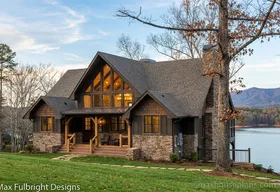
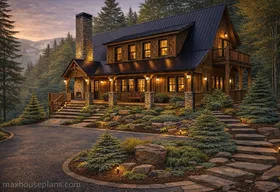
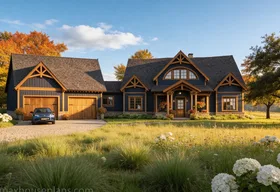
The key in a modern dog trot is keeping the breezeway real. I’ve seen plans marketed as “dog trot style” that are really just a house with a covered walkway to the garage. That’s not a dog trot. A true dog trot has the breezeway as the central organizing element — it shapes the floor plan, directs the airflow, and defines how you move through the home. Our Camp Creek Dog Trot is a great example of how to keep that authenticity while delivering a fully modern layout.
Why Dog Trot House Plans Are Trending Again
I’ve noticed a real surge in interest over the past few years, and I think several things are driving it:
- Energy consciousness: People want homes that work with the climate, not against it. A dog trot’s passive cooling is genuinely effective and reduces reliance on mechanical systems.
- Indoor-outdoor living: The breezeway is the ultimate outdoor room. It’s covered, it’s breezy, and it’s right in the center of your home. That lifestyle appeal is huge right now.
- Distinct character: In a world of cookie-cutter subdivisions, a dog trot stands out. It has story and soul. People want homes that feel like something.
- Rural and acreage properties: As more people move to rural land — remote work made that possible — the dog trot fits perfectly on larger lots where you want to engage with the landscape, not block it out.
- Phased construction: Just like the original settlers, you can build one wing first and add the second later. That’s a powerful financial strategy for owner-builders.
What Lot Types Work Best for a Dog Trot?
Dog trots love space. The design works best when you can orient the breezeway to catch prevailing winds — which usually means positioning it perpendicular to the dominant summer breeze direction in your area.
Ideal lot characteristics include:
- At least half an acre — the wider footprint of a dog trot needs room to breathe (literally)
- Rural, wooded, or open pastoral settings — this is where the aesthetic shines
- Gentle slope or flat terrain — though dog trots can work beautifully on a mild hillside with one wing stepping down
- Lots with good prevailing wind exposure — avoid sites boxed in by dense neighboring structures
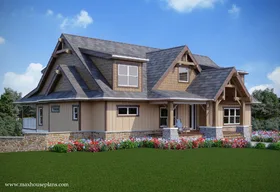
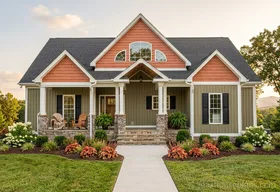
Can you put a dog trot on a suburban lot? Sometimes. But you’ll need enough width to accommodate the broader footprint, and the passive cooling benefits diminish when you’re surrounded by other houses. A plan like Diana’s Dog Trot Cabin works well on more modest acreage because it keeps the footprint efficient while preserving that essential breezeway character.
Typical Square Footage and Layouts
Most modern dog trot house plans fall between 1,200 and 2,800 square feet, though I’ve designed them smaller for vacation cabins and larger for full family homes. Here’s how the layout typically breaks down:
- Wing A (Public): Great room, kitchen, dining — the social hub of the home
- Wing B (Private): Master suite, secondary bedrooms, bathrooms
- Breezeway: 8–14 feet wide, open or screenable, often used as the main entry and outdoor living space
- Porches: Front and/or rear porches extending the roofline — a natural companion to the dog trot form
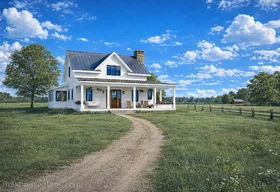
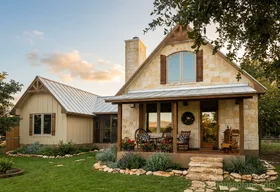
The Big Dogtrot plan is a perfect example of how this layout scales up for families who want more room without losing the character that makes a dog trot special.
Cost: Dog Trot vs. Traditional Construction
Let’s talk money. A dog trot will typically cost 5–15% more per square foot than a comparably sized conventional home. Here’s why:
- More roof area: The continuous roofline spanning the breezeway adds material and labor
- More exterior wall: Two separate wings means more exterior surface than a compact rectangle
- Foundation complexity: Two structures plus a breezeway foundation versus one continuous slab or crawlspace
But here’s the flip side — and this is where I get passionate about it:
- Lower cooling costs over the life of the home, especially in climate zones 2–4
- Phased building potential that lets you spread costs over time
- Higher resale appeal because these homes are distinctive and increasingly desirable
- Less wasted space — every square foot in a dog trot has purpose, which is something I obsess over in all my designs
When I design a dog trot, I’m always looking for ways to keep the construction efficient without compromising the design intent. Simple rooflines, smart structural spans, and practical material choices go a long way.
How I Approach Designing Dog Trot House Plans
Every dog trot I design starts with the breezeway. It’s the heart of the house, and getting it right determines everything else. Here’s my process:
- Breezeway width and orientation: I figure out the prevailing wind direction for the build site and size the breezeway to maximize airflow — usually 10–12 feet wide for residential plans.
- Wing separation: The two wings need to feel like distinct zones (that’s the whole point) while still flowing together as one home. Sight lines through the breezeway are critical.
- Roofline continuity: A dog trot roof should read as one roof, not two buildings shoved together. This is where a lot of modern interpretations fall short.
- Eliminating wasted space: I’m an engineer turned builder turned designer. Every plan I draw is designed to cut wasted square footage and reduce construction costs. That philosophy applies double to dog trots, where the open breezeway already uses valuable footprint.
- Authenticity check: Before I finalize any dog trot plan, I ask myself — does the breezeway feel like the center of this home, or does it feel like an afterthought? If it’s an afterthought, I start over.
What Makes a Dog Trot Feel Authentic
This matters. A lot. Here’s what separates a real dog trot from a house that just happens to have a covered walkway:
- The breezeway is open on both ends. If it’s enclosed, it’s a hallway — not a breezeway.
- The roofline is continuous. Both wings and the breezeway share one unbroken roof structure.
- The breezeway is wide enough to live in. Eight feet minimum. Ten to twelve is ideal. You should be able to put a rocking chair, a table, and still walk through comfortably.
- The wings are functional on their own. Each wing should feel like a complete space, not half a house.
- The breezeway shapes daily life. You should want to spend time there. It’s not a pass-through — it’s a destination.
A dog trot without a real breezeway is like a farmhouse without a porch — you’ve kept the shape but lost the soul.
Frequently Asked Questions
What is a dog trot house plan?
A dog trot house plan features two separate living wings connected by an open-air breezeway under a single continuous roofline. The breezeway serves as a natural cooling passage and outdoor living space, making it one of the most practical and iconic forms of Southern vernacular architecture.
Are dog trot houses energy efficient?
Yes. The open breezeway creates a passive cooling effect that can significantly reduce air conditioning costs, especially in hot and humid climates. When oriented to catch prevailing winds, a dog trot can lower interior temperatures by 10–15 degrees naturally. Combined with modern insulation and HVAC, they offer excellent energy performance.
How much does it cost to build a dog trot house?
Dog trot homes typically cost 5–15% more per square foot than a conventional home of similar size due to additional roofing, exterior walls, and foundation work. However, lower long-term energy costs, phased construction potential, and strong resale value can offset that premium over time.
Can you enclose the breezeway of a dog trot?
You can add screens or even operable glass panels to a dog trot breezeway for bug protection or seasonal use. However, fully enclosing it with permanent walls eliminates the passive airflow that defines the design. Many modern dog trot plans include a screenable breezeway as a practical compromise that preserves the open-air feel.
What size lot do I need for a dog trot house?
A dog trot’s wider footprint generally requires at least half an acre, though more space is better. The design works best on rural, wooded, or open lots where the breezeway can be oriented to catch prevailing winds. Tight suburban lots can work in some cases, but the passive cooling and aesthetic benefits are maximized with more room around the home.
Ready to Explore Dog Trot House Plans?
The dog trot is one of those rare designs that was perfect 200 years ago and is still perfect today. If you’re drawn to homes that work with the land instead of fighting it — homes with character, airflow, and a way of living that slows you down just enough — then a dog trot might be exactly what you’re looking for.
Browse our full collection of plans, including our dog trot designs, and find the home that fits your land, your budget, and your life. Explore all house plans here.