

In this article
Cost to Build a Mountain House in North Carolina (2026 Guide)
If you’re dreaming about building in the Blue Ridge or Smoky Mountains, the first question on your mind is probably: what does it cost to build a mountain house in North Carolina? It’s a fair question – and one I get asked almost every week. After 25-plus years of designing homes and working alongside builders, I can tell you the answer is never as simple as a single number. But I can give you real ranges, explain what drives costs up (and what doesn’t), and help you plan a build that doesn’t blow your budget.
I’ve spent most of my career designing and building in the mountains and foothills of West Georgia and East Alabama – terrain that has a lot in common with western North Carolina. Steep lots, rocky soil, long driveways, well and septic systems – I’ve dealt with all of it. The lessons translate directly, and I want to share what I’ve learned so you can go into your NC mountain build with your eyes wide open.
Average Cost Per Square Foot for Mountain Construction in NC
In 2026, you should expect to pay somewhere between $175 and $300+ per square foot to build a mountain house in North Carolina. That’s a wide range, I know. Here’s why:
- $175-$220/sq ft – A well-planned, efficient design on a manageable lot. Standard finishes, a local builder who knows the area, and a plan that doesn’t fight the terrain. This is realistic for a lot of folks building in areas like Hendersonville, Brevard, or the outskirts of Boone.
- $220-$275/sq ft – Mid-range custom work. Nicer finishes, maybe some timber accents, stone on the exterior, a more complex roofline. This is where most of my clients land when they want something that feels special but isn’t over the top.
- $275-$350+/sq ft – High-end custom builds with premium materials, heavy timber framing, expansive decks, luxury kitchens and baths, and complicated sites. Think Asheville-area luxury or a remote ridge-top build where everything costs more to get there.
These numbers include the house itself – not land, not site work like driveways and grading, and not furnishings. I’ll break those out separately because on a mountain lot, site costs can surprise you.
What Drives Mountain Building Costs Up
Mountain building is not the same as building on a flat subdivision lot in Charlotte. The terrain itself is the biggest variable, and it affects almost every line item in your budget. Here’s what to watch for:
Sloping Lots and Difficult Access
A sloping lot is part of what gives you those stunning long-range views – but it costs money to build on. The steeper the slope, the more expensive the foundation, the more complex the grading, and the harder it is to get materials and equipment to the building site. I’ve seen site prep alone add $30,000 to $80,000+ on a steep mountain lot compared to a gentle slope.
Access matters too. If your lot is at the end of a gravel road – or worse, a road that needs to be built or improved – that cost lands on you. Delivery trucks for concrete, lumber, and trusses need a road they can actually navigate. Budget for driveway construction: a long, steep gravel driveway can easily run $15,000 to $50,000 depending on length, grade, and drainage requirements.
Well and Septic Systems
Most mountain lots in NC don’t have municipal water or sewer. That means you’re drilling a well and installing a septic system. A drilled well in the mountains typically runs $8,000 to $20,000+ depending on depth – and in rocky terrain, you might have to go deep. Septic systems range from $10,000 to $30,000+, especially if the soil percolation test requires an engineered or alternative system.
Get your perc test done before you buy the land. I can’t stress this enough. If the land won’t perc for a standard system, you’re looking at an engineered system that can double or triple the septic cost – or in rare cases, the lot may not be buildable at all.
Remote Sites and Material Delivery
The farther you are from a lumber yard and concrete plant, the more you’ll pay for delivery. Remote mountain sites can add 10-15% to material costs just in freight and delivery surcharges. Concrete trucks charge by the mile beyond a certain radius, and some won’t even go up certain roads. I’ve seen builders have to pump concrete long distances on steep sites, which adds thousands to the foundation pour.
How Foundation Type Affects Your Budget
Foundation choice is one of the biggest cost decisions on a mountain build, and the terrain usually makes the choice for you.
- Slab on grade – The cheapest option, but rarely practical on a mountain lot unless you have a flat pad. If you do, count yourself lucky.
- Crawl space – Common in the mountains. A stepped or tall crawl space on a mild slope is a solid, cost-effective choice. Expect to pay $15,000-$35,000 depending on the size and height of the walls.
- Walkout basement – This is where mountain building really shines. A sloping lot that’s a headache for a slab becomes an asset with a walkout basement. You get a full lower level – extra living space, a garage, storage – and the cost per square foot of that basement space is significantly less than adding the same square footage above grade. A walkout basement foundation typically runs $40,000-$80,000+, but the livable space you gain makes it one of the best values in mountain construction.
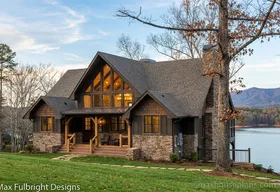
A plan like our River’s Reach is designed specifically for a sloping lot with a walkout basement. That kind of plan works with the terrain instead of against it – and that’s where you save real money.
How Plan Choice Affects Build Cost
This is something I talk about constantly, because it’s the one area where you have the most control over your final cost. The house plan you choose – before a single shovel hits the dirt – determines a huge percentage of what you’ll spend.
Here’s what I mean:
- Roofline complexity – Every hip, valley, and ridge adds cost. A simple gable roof is far cheaper to frame and shingle than a roof with six or eight different planes. A good mountain plan gives you architectural interest without unnecessary roof complexity.
- Corners and bump-outs – Every corner in a floor plan costs money. More corners = more framing, more siding, more trim, more flashing. Efficient plans minimize corners while still creating interesting, livable spaces.
- Footprint vs. square footage – A two-story plan on a smaller footprint costs less to build than a sprawling single-story with the same square footage. The foundation and roof are smaller – and those are two of your biggest cost items.
- Wasted space – Oversized hallways, unused bonus rooms, and poor circulation waste square footage. Every square foot you build costs money, so every square foot should earn its keep.
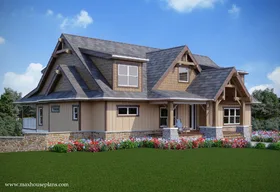
This is exactly why I design the way I do. A plan like the Appalachia Mountain gives you a dramatic mountain feel – big porches, open living, great views – without wasting a single square foot. That efficiency translates directly to savings on build day.
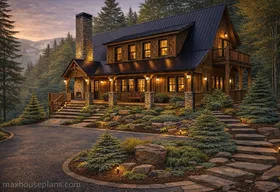
If you’re looking for something with more vertical presence to take advantage of a steep lot, the Asheville Mountain plan stacks living space over three stories. You get a big house on a smaller footprint, which means less foundation and less roof – two of your most expensive items.
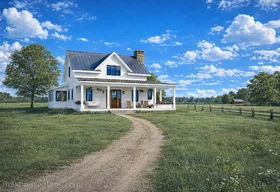
For those who want to keep things simple and affordable, the Blowing Rock Cottage proves that a smaller mountain home can still feel open and generous without the price tag of a 3,000-square-foot custom build.
What’s Included vs. What’s Extra
When a builder gives you a per-square-foot price, ask exactly what’s included. There’s no industry standard, and the difference between quotes often comes down to what’s in – and what’s not. Here’s a general breakdown:
Typically included in a builder’s price:
- Foundation, framing, roofing
- Exterior siding and trim
- Windows and exterior doors
- Plumbing, electrical, HVAC
- Insulation and drywall
- Interior doors, trim, and paint
- Basic cabinetry and countertops
- Standard fixtures and appliances
Often NOT included:
- Land and closing costs
- Site work (grading, driveway, retaining walls)
- Well and septic
- Permits and impact fees
- Landscaping and exterior lighting
- Decks and porches (sometimes quoted separately)
- Upgrades beyond standard allowances
- Furnishings and window treatments
On a mountain build, the “not included” list can easily add $50,000 to $150,000+ to your total project cost. Plan for it from day one.
Contractor vs. Owner-Builder
I get asked about this a lot: “Can I save money by being my own general contractor?” The honest answer is yes – if you know what you’re doing. A good general contractor typically adds 15-20% to the cost of construction for their management fee and profit. On a $400,000 build, that’s $60,000-$80,000. That’s real money.
But here’s the flip side. An experienced GC in the NC mountains knows which subcontractors show up, which ones do quality work, how to sequence trades on a steep site, how to deal with weather delays, and how to navigate county inspections and permits. They have relationships with suppliers that get better pricing and priority delivery. They’ve solved problems you haven’t encountered yet.
If you’ve never managed a construction project, trying to save that 15-20% can easily cost you more in mistakes, delays, and rework. My advice: if you’re going to owner-build, start with something smaller – maybe a cabin or a shop – before you tackle your primary residence. Learn the process on a project where the stakes are lower.
Practical Tips to Control Your Mountain Build Budget
- Choose your lot carefully. A $30,000 lot that needs $80,000 in site work isn’t cheaper than a $70,000 lot that’s ready to build. Factor in the total cost to make the site buildable.
- Pick an efficient plan. Don’t pay to build space you won’t use. A well-designed 1,800 sq ft home lives bigger than a poorly designed 2,400 sq ft home.
- Design for the slope. Use a walkout basement plan on a sloping lot. Don’t fight the terrain – work with it.
- Lock in your selections early. Change orders during construction are expensive. Make your finish selections before framing starts.
- Get multiple bids. At least three, from builders who have experience on mountain sites. A lowball bid from a flatland builder who’s never worked on a slope is a recipe for problems.
Frequently Asked Questions
How much does it cost per square foot to build a mountain house in North Carolina?
In 2026, expect to pay between $175 and $300+ per square foot for the house itself, depending on the complexity of the design, site conditions, and finish level. Site work, well, and septic are typically additional costs that can add $50,000-$150,000 to the total project.
Is it more expensive to build on a steep mountain lot?
Yes. Steep lots require more complex foundations, more grading, and often longer driveways. However, a walkout basement plan can turn a sloping lot into an advantage by giving you extra living space at a lower per-square-foot cost than building above grade.
Do I need a well and septic system for a mountain home in NC?
Most mountain lots in North Carolina are not served by municipal water or sewer, so yes – you’ll likely need both. Budget $8,000-$20,000 for a well and $10,000-$30,000+ for septic, depending on depth and soil conditions. Always get a perc test before purchasing land.
Can I save money by being my own general contractor?
Potentially 15-20% on construction costs, but only if you have experience managing trades, scheduling, and navigating permits. For first-time builders, the risk of costly mistakes often outweighs the savings. Consider starting with a smaller project to learn the process.
What type of foundation is best for a mountain home in North Carolina?
A walkout basement is often the best choice for mountain lots with a slope. It works with the terrain, gives you additional living or garage space, and costs less per square foot than adding that space above grade. For flatter lots, a crawl space foundation is a solid, cost-effective option.
Ready to Start Planning Your Mountain Home?
The cost to build a mountain house in North Carolina comes down to three things: the lot you choose, the plan you build, and the builder you hire. Get those three right, and you’ll end up with a home that fits the mountains – and your budget.
Browse our full collection of mountain house plans designed for real-world buildability. Every plan is drawn to minimize wasted space, work with sloping terrain, and give you the mountain living experience without unnecessary cost. If you’ve got questions about a specific plan or need help thinking through your build, reach out – I’m happy to help.