How to Choose a Foundation Type for a Sloping Lot
Choosing the right foundation type for a sloping lot is one of the most important decisions you’ll make before breaking ground. I’ve poured foundations on flat fields, gentle hillsides, and steep lakefront bluffs “” and I can tell you that the slope of your land changes everything about what goes underneath your home. Get it right, and you unlock bonus living space, beautiful views, and a rock-solid structure. Get it wrong, and you’re looking at drainage nightmares, cracked walls, and tens of thousands in fixes.
In this guide, I’ll walk you through the four main foundation types, explain when each one works on a slope, and share the hard-won lessons I’ve learned from decades of building on challenging terrain.
Understanding Your Lot’s Slope
Before you can pick a foundation, you need to understand what your lot is actually doing. Slope is measured as the elevation change over a horizontal distance “” typically expressed as a percentage. A lot that drops 5 feet over 50 horizontal feet has a 10% slope.
Here’s a quick way to think about it:
- 0″“5% slope: Essentially flat. Almost any foundation works.
- 5″“10% slope: Mild slope. Crawl spaces and basements become practical options.
- 10″“20% slope: Moderate to steep. Walkout basements shine here.
- 20%+ slope: Steep terrain. Requires careful engineering, and walkout or daylight basements are usually the only smart play.
I always tell my clients: get a survey done before you fall in love with a foundation plan. A topographic survey shows you the exact grade, and it’s worth every penny. I’ve seen people buy a “flat” lot that actually had an 8-foot drop from front to back “” invisible to the eye because of how the trees and brush hid it.
The 4 Main Foundation Types
1. Slab-on-Grade
A slab foundation is exactly what it sounds like “” a thick pad of concrete poured directly on the ground. It’s the simplest and most affordable foundation type, and it works beautifully on flat or nearly flat lots.
When it works on a slope: Slab foundations can handle very mild slopes, typically under 5%. You can do some minor grading to level the building pad, but once you’re moving more than a couple feet of dirt, costs climb fast and you start creating drainage problems.
When it doesn’t work: If your lot drops more than about 2″“3 feet across the footprint of the house, a slab becomes impractical. You’d need retaining walls, extensive fill dirt, and compaction “” and even then, you risk settling and cracking over time. I’ve seen builders try to force a slab on a sloped lot by bringing in truckloads of fill. Five years later, the homeowner had cracks running through the slab because the fill wasn’t properly compacted. It’s not worth it.
Cost: Lowest of the four options on flat ground. On a slope, the cost of grading and retaining walls can push it past other options that would have been smarter to begin with.
2. Crawl Space
A crawl space foundation uses short foundation walls (typically 2″“4 feet tall) with the house framed above. It lifts the home off the ground, creating access underneath for plumbing, HVAC, and electrical.
When it works on a slope: Crawl spaces handle mild to moderate slopes well “” roughly 5″“10%. The foundation walls on the downhill side are simply taller than the uphill side, which naturally accommodates the grade change. This is one of the most common foundation choices for gently rolling lots.
Pros:
- Adapts to moderate slopes without major earthwork
- Easy access to utilities underneath
- Elevates the home, which helps with moisture and flood zones
- More affordable than a full basement
Cons:
- No usable living space below
- Needs proper ventilation and moisture barriers to prevent mold
- Can be a critter highway if not properly sealed
Plans like The Landing House are designed to work beautifully on crawl space foundations, keeping the home elevated with a classic Southern look that suits rolling terrain.
3. Full Basement
A full basement means digging down 8″“9 feet and pouring foundation walls around the entire perimeter. The basement floor is typically at or below grade on all sides.
When it works on a slope: Full basements can work on mild slopes, but they really make sense when you want the extra square footage and your lot has a gentle grade. On steeper slopes, a full basement means burying one side deep into the hillside “” which creates serious waterproofing and drainage challenges.
Pros:
- Huge amount of additional space (storage, mechanical, or finished living area)
- Great for colder climates where footings need to go below the frost line anyway
- Adds significant value to the home
Cons:
- On a slope, the buried uphill wall is under constant hydrostatic pressure
- Waterproofing is critical and expensive
- More excavation, more concrete, more cost
If your lot has only a mild slope and you want a basement, a full basement can work “” but on anything steeper than about 8″“10%, I’d steer you toward a walkout instead.
4. Walkout Basement (The Slope Specialist)
This is where sloping lots go from a challenge to a massive advantage. A walkout basement is built into the hillside so that one or more walls are fully exposed at grade level “” meaning you can walk right out of the basement onto the ground. The uphill side is buried, and the downhill side opens up with full-height doors and windows.
When it works on a slope: Walkout basements are ideal for lots with 8 feet or more of elevation change across the house footprint. They’re the gold standard for hillside building, lakefront properties, and mountain homes.
Why I love walkout basements on sloping lots:
- Bonus living space: You’re essentially getting a full additional floor for the cost of a foundation. That’s a huge value play.
- Natural light: The exposed wall(s) can have full-size windows and doors “” no dark, dungeon-like basement feel.
- Direct outdoor access: Walk out to a patio, a lake, or a backyard without climbing stairs.
- Better drainage: Water naturally flows away from the exposed side, reducing hydrostatic pressure compared to a fully buried basement.
- Views: On a lakefront or mountain lot, the walkout level often has the best views in the house.
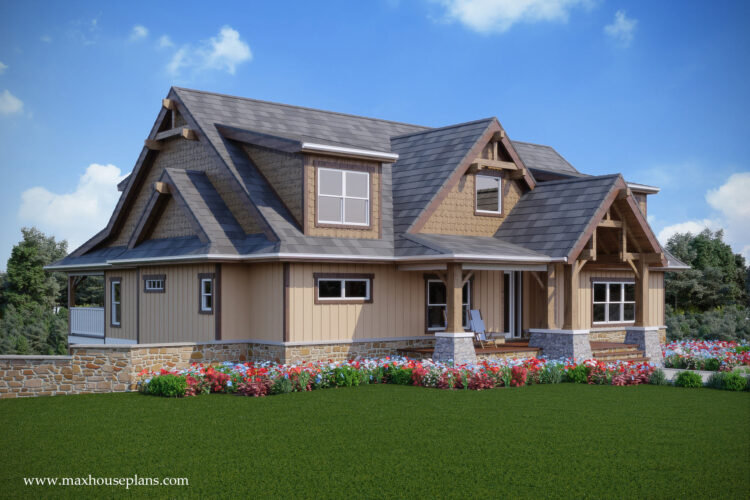
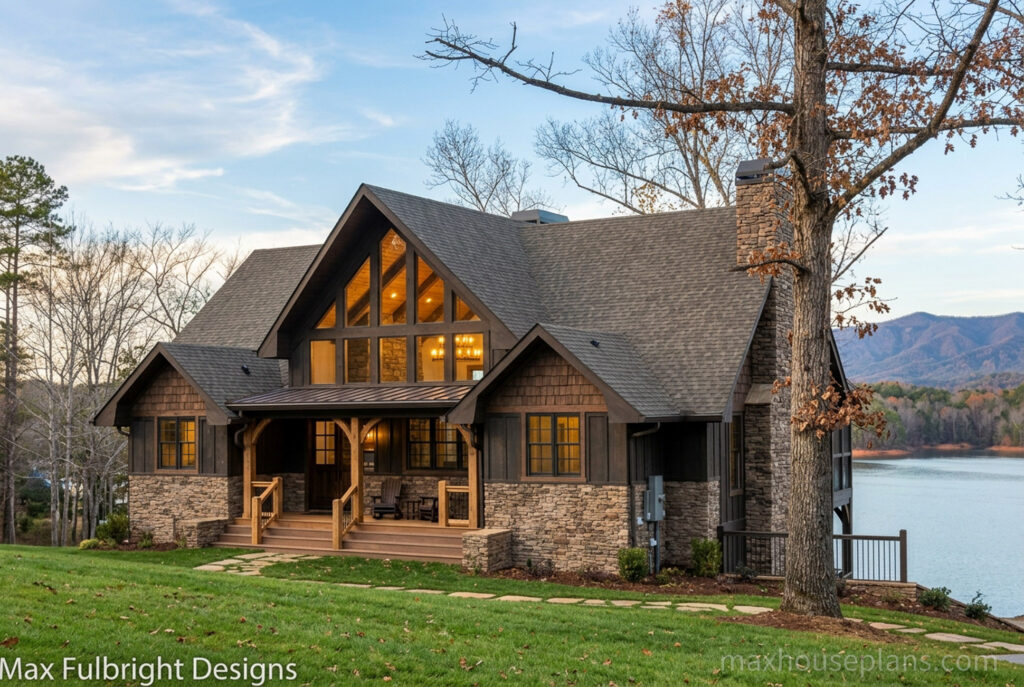
Many of our most popular designs take full advantage of walkout basements. River’s Reach is a mountain home designed specifically for a sloping lot with a walkout lower level that opens to the landscape. Appalachian Mountain III does the same thing for a lake house setting “” the walkout level adds living space that feels like a natural extension of the main floor.
Butler’s Mill and Olde Stone Cottage are two more designs where the walkout basement isn’t an afterthought “” it’s central to how the home lives. These plans are drawn specifically for the kind of lots where a walkout makes sense.
Cost Comparison: Foundation Types on a Slope
Let me give you a realistic cost picture. These are general ranges “” your actual numbers depend on region, soil conditions, and contractor rates:
- Slab on a flat lot: Least expensive. On a slope? Grading and retaining walls can double the cost.
- Crawl space: Moderate. Taller walls on the downhill side add some cost, but it’s predictable.
- Full basement: Higher upfront, but you’re gaining 800″“2,000+ square feet of space. On a slope, waterproofing costs increase.
- Walkout basement: Similar cost to a full basement, but you save on excavation (you’re working with the slope, not fighting it) and waterproofing is simpler because the exposed wall doesn’t need the same treatment.
Here’s the way I explain it to my clients: a walkout basement on a sloping lot often costs less per square foot of living space than any other foundation option. You’re turning the slope into usable square footage instead of spending money to fight the grade.
Drainage: The Make-or-Break Factor
No matter which foundation type you choose for a sloping lot, drainage will determine whether your foundation lasts 100 years or gives you problems in 5. Water flows downhill “” obvious, right? But I’ve seen countless builders and homeowners underestimate what that means when there’s a house in the way.
Key drainage considerations:
- French drains: On any buried wall, install a perforated drain pipe at the base of the footing, wrapped in gravel and filter fabric. This is non-negotiable.
- Grading away from the foundation: The finish grade should slope away from the house on all sides “” at least 6 inches of fall in the first 10 feet.
- Waterproofing vs. damp-proofing: On a sloped lot with buried walls, don’t settle for the cheap spray-on damp-proofing. Invest in a true waterproofing membrane. The uphill side of your foundation will see more water pressure than a flat-lot foundation ever would.
- Downspout routing: Route your gutters and downspouts well away from the foundation. On a slope, this usually means directing water to the downhill side.
Soil Testing: Don’t Skip This Step
I’ve seen beautiful home designs derailed because nobody tested the soil before choosing a foundation type. A geotechnical report tells you:
- Bearing capacity: Can the soil support the weight of your chosen foundation?
- Water table depth: High water tables on a slope can mean constant seepage into basements.
- Soil composition: Clay expands and contracts. Rock requires blasting. Sand drains well but may not hold a footing without engineering.
- Slope stability: On steeper lots, you need to know whether the hillside itself is stable enough to build on.
A soil test typically costs $1,500″“$3,000. Compared to the cost of a foundation failure, it’s the best insurance money can buy.
Mistakes I’ve Seen (and How to Avoid Them)
After years of building on sloped lots, here are the most common mistakes I see homeowners and even some builders make:
- Forcing a slab on a sloped lot. I get it “” slabs are cheap. But bringing in 200 yards of fill dirt to level a pad on a 10% slope is a recipe for settling and cracking. Work with the land, not against it.
- Ignoring the uphill side drainage. The uphill wall of any foundation on a slope takes the most water pressure. Skimping on drainage here will come back to haunt you “” usually as a wet basement or bowed wall.
- Not planning the walkout level as living space. If you’re building a walkout basement, design it as real living space from the start. Ceiling height, egress windows, HVAC “” plan it all upfront. Finishing a basement that wasn’t designed for it is always more expensive.
- Choosing a plan that doesn’t match the lot. A home designed for a flat lot won’t magically work on a hillside. Choose a plan “” or have one designed “” that’s built for your specific grade and orientation.
- Skipping the survey and soil test. These two reports together cost a few thousand dollars. They can save you tens of thousands by telling you exactly what foundation your lot needs before you pour a single yard of concrete.
How to Match Your Foundation to Your Lot
Here’s my simple decision framework:
- Get a topographic survey to know your exact slope percentage.
- Get a soil test to understand what’s under the surface.
- Under 5% slope? Slab or crawl space “” your choice based on budget and climate.
- 5″“10% slope? Crawl space or full basement, depending on whether you want the extra space.
- Over 10% slope? Walkout basement. This is where the slope becomes your biggest asset instead of your biggest problem.
And always, always work with a designer or architect who has experience with sloped-lot construction. The foundation plan needs to account for your specific elevation changes, soil, and drainage patterns.
What is the best foundation type for a sloping lot?
For most sloping lots with more than 8 feet of elevation change, a walkout basement is the best foundation choice. It works with the natural grade instead of fighting it, provides bonus living space with natural light and outdoor access, and typically costs less per square foot of usable space than other options on a slope.
How much slope is too much for a slab foundation?
Generally, if your lot has more than a 5% slope “” or more than about 2″“3 feet of elevation change across the footprint of the house “” a slab foundation becomes impractical. The cost of grading, fill dirt, and retaining walls quickly exceeds what you’d spend on a crawl space or basement that naturally handles the slope.
Is a walkout basement more expensive than a regular basement?
On a sloping lot, a walkout basement often costs the same or even less than a fully buried basement. You save on excavation because you’re working with the slope, and the exposed wall requires less waterproofing than a buried one. Plus, the finished living space you gain adds significant value to the home.
Do I need a soil test before choosing a foundation for a sloped lot?
Yes “” a geotechnical soil test is essential for any sloped lot. It reveals the soil’s bearing capacity, water table depth, composition, and slope stability. This information directly affects which foundation types are viable and how they need to be engineered. The cost of $1,500″“$3,000 is minimal compared to the risk of a foundation failure.
Can I build a house with a crawl space on a steep hill?
Crawl spaces work well on mild to moderate slopes (roughly 5″“10%), but on steep hills the downhill foundation walls become very tall and expensive, and you lose the opportunity to use that space as livable square footage. For slopes over 10%, a walkout basement is usually a better choice because it turns that height into usable living space rather than wasted crawl area.
Ready to Build on Your Sloping Lot?
A sloping lot isn’t a problem “” it’s an opportunity. The right foundation type turns that grade into bonus living space, stunning views, and a home that feels connected to the land. Whether you’re building on a mountain ridge, a lakefront bluff, or a rolling hillside, we’ve got plans designed specifically for sloped terrain.
Browse our full collection of house plans to find a design that fits your lot, your lifestyle, and your budget. And if you need help figuring out which foundation works best for your specific property, don’t hesitate to reach out “” we’ve been building on slopes for a long time, and we’re happy to help.