


Guide March 25, 2026
How to Read a House Plan (A Complete Beginner’s Guide)
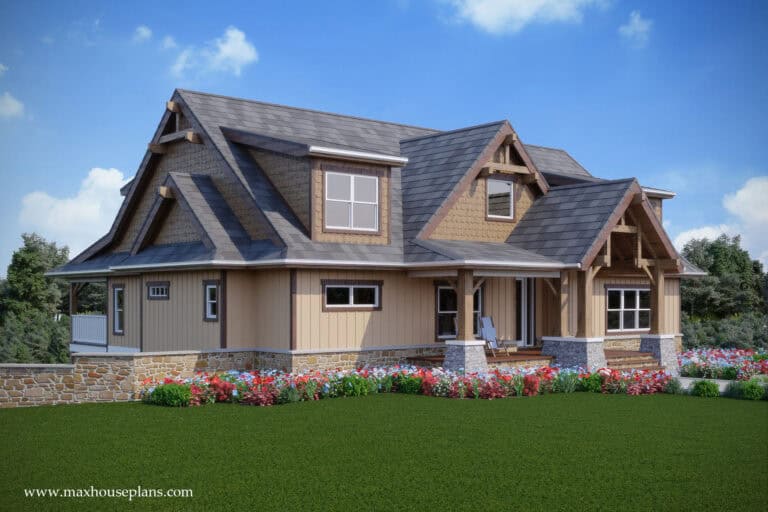
How to Read a House Plan (A Complete Beginner’s Guide)
To read a house plan, start with the floor plan, then use the dimensions, symbols, elevations, foundation plan, and roof plan to see how the house will actually be built. This beginner’s guide explains each drawing in plain language, so you can ask better questions and choose with confidence.
I’m Max Fulbright, and I’ve spent over 25 years designing and building homes. I don’t just draw plans – I’ve framed walls, poured foundations, and stood on job sites watching these drawings become real houses. That dual perspective is exactly why I want to walk you through this. When you understand what’s on those pages, the entire building process gets easier.
What’s Included in a House Plan Set?
Before we dive into reading individual pages, let’s talk about what you actually get when you purchase a plan set. A complete set of house plans isn’t just one page – it’s a collection of drawings that together tell a builder everything needed to construct your home.
A typical plan set includes:
- Floor plans – The bird’s-eye view of each level showing room layouts, walls, doors, and windows
- Exterior elevations – Flat views of each side of the house (front, rear, left, right)
- Foundation plan – Shows the footprint of the home at ground level, including footings, piers, and crawlspace or basement layout
- Roof plan – The overhead view of the roof showing ridges, valleys, slopes, and pitch
- Cross sections – Vertical slices through the house revealing wall construction, ceiling heights, and structural details
- Electrical plan – Locations of outlets, switches, light fixtures, and panel boxes
- Detail drawings – Close-up views of specific construction elements like stair framing, fireplace construction, or window trim
Each page serves a different purpose, and your builder will reference different sheets at different stages of construction. Think of it as a cookbook – you don’t read the whole thing front to back, you flip to the page you need.
How to Read a Floor Plan
The floor plan is the sheet most people recognize. It’s an overhead view of the home as if you sliced the roof off and looked straight down. This is where you’ll see room sizes, wall locations, door swings, window placements, and how spaces flow together.
Walls, Doors, and Windows
On a floor plan, walls appear as parallel lines. Thicker lines usually indicate exterior walls (which are wider due to insulation and sheathing), while thinner lines represent interior partition walls.
Doors are shown as gaps in the wall with an arc indicating the swing direction. A quarter-circle arc means the door swings 90 degrees – the arc shows you exactly where it swings and how much floor space it needs. Sliding doors appear as overlapping parallel lines.
Windows show up as three parallel lines within the wall – the two outer lines represent the wall, and the middle line represents the glass. Some plans use slightly different conventions, but this is the most common.
Reading Dimensions
Dimensions are the numbers and lines running along the outside (and sometimes inside) of the floor plan. In residential construction, dimensions are given in feet and inches – written as something like 12′-6″ (twelve feet, six inches).
You’ll typically see three strings of dimensions on each side of the plan:
- Overall dimension – The total length of that wall of the house
- Major breaks – Distances between significant wall offsets or jogs
- Detail dimensions – Locations of individual windows, doors, and wall intersections
Here’s a tip from the builder side of me: dimensions on plans are typically measured to the face of the framing, not to the finished drywall surface. That matters when you’re standing in the framed house trying to figure out if your furniture will fit. Drywall adds about an inch to each side of a room.
Understanding Symbols and Abbreviations
House plans use standardized symbols to keep drawings clean and readable. Once you learn a handful of them, you’ll be able to read almost any plan. Here are the most common ones:
- WH – Water heater
- WIC – Walk-in closet
- WD – Washer/dryer
- REF – Refrigerator
- DW – Dishwasher
- FP – Fireplace
- WP – Waterproof or weather-protected
- CLG – Ceiling
- FIN FLR – Finished floor
- TYP – Typical (meaning this detail repeats elsewhere)
You’ll also see symbols for electrical components – circles for ceiling lights, half-circles for wall sconces, triangles or special marks for switches, and small parallel lines for outlets. Most plan sets include a symbol legend on the first or last page that explains every symbol used.
Pro tip: If you see a note that says “TYP” next to a detail, it means that same condition applies everywhere you see a similar situation on the plans – not just in that one spot.
How to Read Elevations
Elevations show the exterior faces of your home as if you were standing directly in front of each side. They’re essential for understanding what the house actually looks like – the rooflines, siding materials, window sizes, porch details, and overall proportions.
Each elevation is labeled – front, rear, left, and right (or north, south, east, west if the plan is oriented to a specific lot). You’ll see:
- Roof pitch – Shown as a small triangle with numbers like 8/12, meaning the roof rises 8 inches for every 12 inches of horizontal run
- Finish floor lines – Dashed lines showing where each floor level sits
- Grade line – The ground level around the house
- Material callouts – Notes indicating siding type, stone, brick, or other exterior materials
When I design a home like the Appalachia Mountain plan, I spend as much time on the elevations as the floor plan. A house can have a great layout but fall flat if the proportions and exterior details aren’t carefully considered.
Understanding Scale
Every sheet in a plan set is drawn to a specific scale, which tells you the relationship between the drawing and the real building. The most common scale for floor plans is 1/4″ = 1′-0″, meaning every quarter inch on paper represents one foot in real life.
Other scales you might see:
- 1/8″ = 1′-0″ – Used for smaller-scale overview drawings or larger homes
- 1/2″ = 1′-0″ – Common for detail drawings and sections
- 1″ = 1′-0″ or 3″ = 1′-0″ – Used for very detailed close-ups of specific construction elements
The scale is always noted on each sheet, usually in the title block at the bottom right corner. Your builder will use an architect’s scale ruler to take measurements directly off the plans – but always defer to written dimensions over scaled measurements. If there’s a conflict, the written number wins.
How to Read a Foundation Plan
The foundation plan might be the most important page your builder uses, and it’s often the most confusing for homeowners. It shows the structural base of your home – what’s happening at or below ground level.
Depending on your foundation type, you’ll see different things:
- Crawlspace – Piers, footings, beams, and floor joist layouts. Plans like our Carolina Farmhouse typically show detailed crawlspace framing.
- Slab-on-grade – Thickened edges, rebar placement, and plumbing rough-in locations
- Basement – Full foundation walls, footing sizes, window wells, and stair locations. Our Appalachian Mountain III plan is a great example of a walkout basement design.
Foundation plans include critical structural notes – concrete strength (measured in PSI), rebar size and spacing, footing depths, and soil bearing requirements. These aren’t just suggestions; they’re engineered specifications that your builder and local building inspector will verify.
Cross Sections and Detail Drawings
If the floor plan shows you the what, sections and details show you the how. A cross section is a vertical cut through the house – imagine taking a chainsaw through the building and looking at the exposed slice. It reveals:
- Wall construction layers (framing, sheathing, insulation, siding)
- Ceiling heights at different points in the home
- How the roof structure connects to the walls
- Foundation-to-framing connections
- Floor-to-floor heights in multi-story homes
Detail drawings zoom in on specific construction elements. You might see a detail for how the porch beam connects to the post on a design like the Camp Creek Dog Trot, or how the stone veneer transitions to siding. These details are where quality construction really shows – or where shortcuts cause problems.
What Does “As-Built” Mean?
You might hear the term as-built during your project. As-built drawings are modified plans that reflect how the home was actually constructed, which sometimes differs from the original plans. Changes happen on every job – a beam shifts six inches, a window gets upsized, a door moves to avoid a conflict with plumbing.
As-built drawings document those changes so there’s an accurate record of what was built. They’re especially important for future renovations, additions, or if you ever need to locate utilities hidden in walls. Keep your as-built drawings – they’re the true blueprint of your home.
Working With Your Builder Using the Plans
Here’s where my experience on both sides of the table really comes through. The plans are a communication tool between you, your designer, and your builder. Here’s how to use them well:
- Walk through the plans together before construction starts. Have your builder explain anything you don’t understand.
- Mark up your set with questions or changes you want to discuss. Use a red pen so notes stand out.
- Don’t assume – if something looks different on the job site than what you see on the plans, ask about it. Sometimes there’s a good reason; sometimes it’s a mistake that needs correcting.
- Keep a clean set on site at all times. Your builder should have their own working set, but a reference set available to all trades prevents misunderstandings.
A well-drawn plan set reduces confusion, prevents costly mistakes, and keeps your project on schedule. That’s why I put so much detail into every plan I design – like the Blowing Rock Cottage, where even a smaller home gets the same level of construction documentation as a large custom design.
How many pages are in a typical house plan set?
Most residential plan sets range from 6 to 15 pages, depending on the complexity of the home. A simple single-story home might have 6-8 sheets, while a larger home with a basement, multiple levels, or detailed custom elements could have 12-15 or more.
Do I need to understand every detail on the plans to build my home?
No – your builder and their subcontractors are the technical experts. But understanding the basics (room layout, dimensions, elevations) helps you make better decisions and catch potential issues early. The more you understand, the smoother your project will go.
What’s the difference between a floor plan and a blueprint?
A floor plan is one page within a complete set of construction drawings. “Blueprint” is an older term that refers to the entire set of plans – named after the blue-and-white printing process used decades ago. Today, plans are printed on white paper, but many people still use the term blueprint to mean the full plan set.
Can I make changes to a house plan after I purchase it?
Yes, most house plans can be modified. Simple changes like adjusting a room size or moving a door are straightforward. Larger changes like adding a second story or changing the foundation type require more extensive redesign. It’s always best to discuss modifications with the designer before construction begins.
What scale are most house plans drawn at?
Most residential floor plans are drawn at 1/4 inch equals 1 foot (1/4″ = 1′-0″). Detail drawings and sections are often at a larger scale like 1/2″ = 1′-0″ or bigger for clarity. The scale is always noted on each sheet so you know exactly what ratio you’re looking at.
Ready to Find Your Plan?
Now that you know how to read a house plan, the next step is finding the right one. Whether you’re looking for a cozy cabin, a sprawling farmhouse, or something in between, every plan in our collection comes with detailed construction documents designed by someone who actually builds. Browse our full collection at MaxHousePlans.com and find the home that fits your life.
Looking for the plan that fits your land?
Browse the full catalog or call Max Sr. directly. We've been doing this since 1990 — usually it's a 10-minute conversation.