


Guide May 6, 2026
Cabin vs. Cottage: What’s the Real Difference?
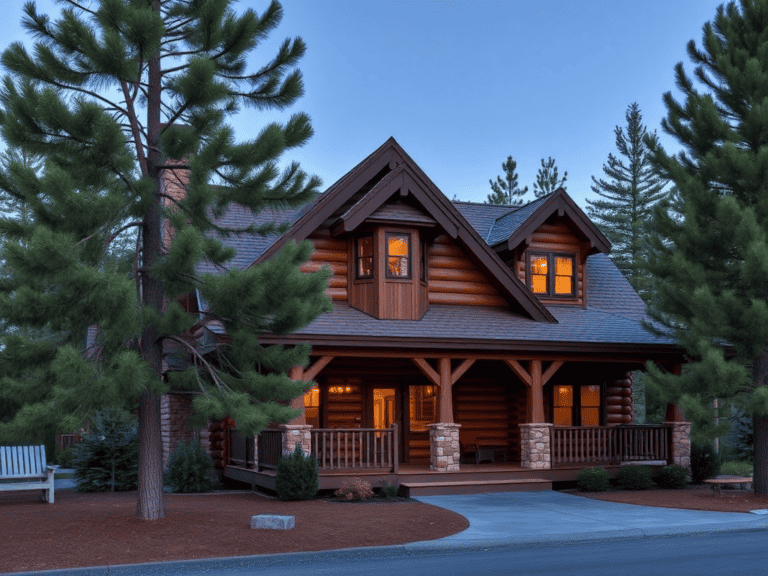
Cabin vs. cottage comes down to how you want the house to live. Cabins tend to be simpler, more rustic, and tied to the landscape, while cottages bring more residential detail and everyday comfort. This comparison covers style, layout, materials, lot fit, and which one feels right for you.
What makes a design a cabin
A cabin is a building that acknowledges it’s in a natural setting. It doesn’t try to be polished. The materials are honest — wood siding, board and batten, exposed logs or timbers, metal roofing. The form is simple: steep roof, compact footprint, deep overhangs. A cabin plan says the site is the main event and the building is a well-constructed shelter that doesn’t compete with it.
Cabin plans tend to prioritize:
- Compact, efficient square footage
- Simple structural logic (easy to build, easy to maintain)
- Covered outdoor space over finished interior space
- Connection to the landscape rather than separation from it
- Sleeping lofts, bunk rooms, and multi-function spaces
The best cabin plans feel like they grew out of the land. They’re not trying to bring suburban life to the woods — they’re making the woods more livable.
What makes a design a cottage
A cottage is a small house that happens to be charming. It has more residential finish than a cabin — more trim, more detail, a more considered floor plan. A cottage plan usually has defined bedrooms (not lofts), a proper kitchen rather than a kitchenette, and interior spaces that function like a house, just at smaller scale.
Cottage plans tend to prioritize:
- Character details: steep rooflines, dormers, window boxes, covered porches
- Defined living zones (formal enough to feel like a home)
- Year-round livability rather than seasonal simplicity
- A specific aesthetic vocabulary (English cottage, Lowcountry cottage, Appalachian vernacular)
- Resale appeal — cottages photograph well
The best cottage plans feel like a real house at a friendly scale. They’re less about the wild landscape and more about making a small space feel complete and well-made.
Where they overlap — and where that creates confusion
Both cabins and cottages are typically small. Both are associated with vacation and second-home contexts. Both appear in mountain and lake settings. The overlap is real, which is why the terms blur.
The useful distinction is about finish and intention:
- A cabin leans toward raw, durable, outdoor-oriented, seasonal
- A cottage leans toward refined, detailed, year-round, home-like
A 1,200-square-foot A-frame cabin designs with a sleeping lofts that work and an open great room is a cabin. A 1,200-square-foot plan with a dormer, a covered front porch with turned posts, and defined bedrooms on each side is a cottage. Same square footage, very different design intentions.
Which fits your land and how you’ll use it
Cabin is usually the better fit when:
- The site is remote or has a strong natural character that should lead the design
- The use is primarily seasonal — summer weekends, hunting season, ski trips
- The budget is tight and efficient construction matters more than finish
- You want the building to feel like it belongs in the landscape, not delivered to it
Cottage is usually the better fit when:
- You want the property to function as a real second home — full kitchen, defined bedrooms, year-round comfort
- The site is a lake lot in an established area where neighboring houses have residential character
- Resale value matters and you want a property that photographs well
- The aesthetic of the plan matters as much as the function
What this means for plan shopping
When a plan site labels something a “lake cottage,” look for defined bedrooms, a real kitchen, and interior finish details. When it labels something a “mountain cabin,” look for simple structure, open multi-use spaces, and a form that handles steep terrain.
If the label doesn’t match what you see in the floor plan, trust the plan, not the label. A plan with a sleeping loft and a kitchenette is a cabin regardless of what it’s called. A plan with a formal dining room and a laundry room is a cottage regardless of the marketing copy.
FAQ
Can a cabin be a permanent residence?
Yes, if it’s designed for it. A cabin that functions as a permanent home needs proper insulation, a full HVAC system, a real kitchen, and at minimum one defined bedroom. The form can still read as a cabin — the construction just needs to meet the demands of year-round occupancy. Many of our mountain plans are designed exactly this way.
Do cabins cost less to build than cottages?
Generally, yes — if the cabin design is genuinely simple. A compact cabin with a board-and-batten exterior, exposed structure, and simple finishes will cost less per square foot than a cottage with detailed trim work, dormers, and a more finished interior. But a complex cabin with a steep multi-ridge roofline can easily cost more than a simple cottage. Compare plans on their actual specifications, not their labels.
Which holds its value better — cabin or cottage?
Cottage-style properties tend to photograph better and have broader buyer appeal, which helps resale. Cabin properties in genuinely remote or scenic locations can command premium prices because the setting is irreplaceable. The land and location matter more than the style label for long-term value.
What’s the difference between a cabin and a bungalow?
A bungalow is a specific architectural style — low-pitched roof, wide overhangs, front porch, Arts and Crafts detailing — that originated in residential suburbs, not wilderness settings. A cabin is a building type defined by its relationship to a natural landscape, not a specific style. A bungalow can be a cabin if it’s in the woods and designed for that setting; most aren’t.
Before you choose — cabin vs. cottage checklist
- ☐ Identified how you’ll actually use the property (seasonal vs. year-round)
- ☐ Assessed the site character — does it call for a raw building or a refined one?
- ☐ Decided how important defined bedrooms vs. sleeping lofts are
- ☐ Considered resale context — what do neighboring properties look like?
- ☐ Checked the plan against its label — does the floor plan match the style claim?
Related Reading
If cottage living is the better fit, browse our cottage style house plans and read how to design a small house that feels larger.
Looking for the plan that fits your land?
Browse the full catalog or call Max Sr. directly. We've been doing this since 1990 — usually it's a 10-minute conversation.