


Guide May 6, 2026
Designing a Mudroom That Earns Its Square Footage
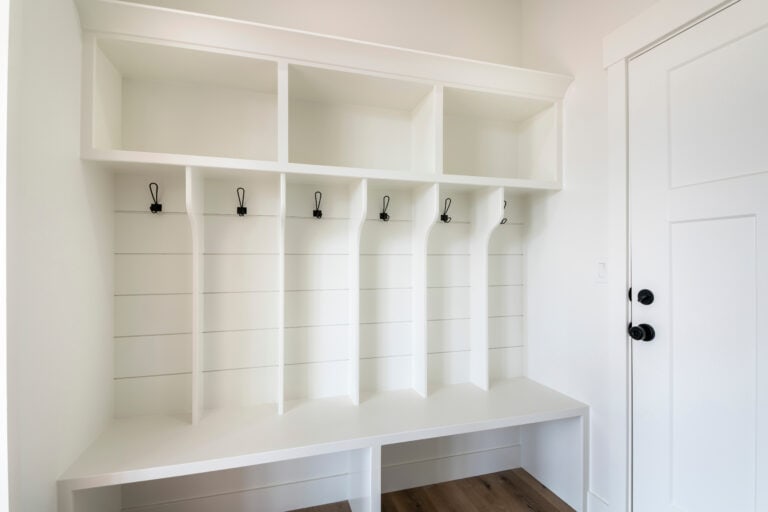
A mudroom that works isn’t decorative. It’s a working buffer zone between outside and inside — and if the plan doesn’t place it correctly or size it properly, it becomes the most cluttered square footage in the house within three months of move-in.
Where It Has to Go
The mudroom belongs between the garage (or side/back entry) and the kitchen — not the front door. The front door is for guests. The mudroom is for daily use: kids off the bus, groceries from the car, wet boots after a rainstorm. That traffic pattern needs to route directly toward the kitchen and bedrooms, not through the living room.
Plans that place the mudroom off the front entry miss this entirely. You get a pretty bench and some hooks next to the formal entry that nobody uses every day. The real entry traffic still flows through the garage door into whatever space is closest — usually the kitchen — and that space becomes the actual dumping ground.
The Entry Sequence That Works
A functioning mudroom requires three zones in sequence:
- The drop zone. A bench wide enough to sit and pull off boots, with hooks above at two heights — adult level and child level if you have kids. This is the immediate entry point from the garage.
- The storage zone. Coat closet or open cubbies for jackets, bags, and sport equipment. Cubbies with doors look better; open cubbies are actually used more.
- The transition. A short hallway or pass-through that leads to the kitchen but filters out the clutter before it reaches the main house. Even 4 feet of hallway creates enough separation that the kitchen feels distinct.
What You Actually Need
- Bench at 18 inches seat height, 18–20 inches deep, at least 5 feet long.
- Hooks at 60–66 inches above floor (adult) and 48 inches (children).
- Floor material that tolerates wet boots: tile, sealed concrete, or moisture-rated engineered hardwood.
- Deep closet or open cubby system for seasonal coats, backpacks, and gear.
- Adequate ceiling lighting — mudrooms are often windowless interior spaces.
Utility Sink — Worth It?
In most cases, yes — particularly on rural properties or houses with a dog. A small wall-mount utility sink handles hand-washing before entering the kitchen, pet foot rinses, and plant watering without tracking through a bathroom. If rough plumbing is nearby, it’s almost always worth adding. Keep it modest — a large laundry sink that consumes floor space without use isn’t worth it.
Mudroom Size
Minimum workable is 5 feet × 8 feet — enough for a bench and coat storage with floor space for boot removal. Ideal is 7 × 10 or larger. Below 5 feet of width, two people cannot use the mudroom simultaneously without bumping into each other. Design it for Tuesday morning in November, not for an open house.
Should the laundry room be combined with the mudroom?
It’s a common combination and works well if the mudroom is sized for both. The laundry equipment shouldn’t compete with the drop-zone bench. In a plan where the mudroom is at least 10 feet wide, combining laundry makes good use of the plumbing rough-in proximity.
How do I plan a mudroom without a dedicated room in my floor plan?
Create a functional drop zone with 6 to 8 feet of wall space near the side or garage entry. A built-in bench with hooks above and shoe storage below accomplishes the core function without requiring a separate room. A floor material change at that zone creates the transition signal even without walls.
What’s the right floor material for a mudroom?
Porcelain tile is the most practical — waterproof, stain-resistant, hard enough for daily boot traffic. Choose a matte finish in a medium tone; it hides dried mud better than light grouts and shows less scuff than dark surfaces. If you prefer wood character, use moisture-rated engineered hardwood, but expect more maintenance.
Related Reading
Looking for the plan that fits your land?
Browse the full catalog or call Max Sr. directly. We've been doing this since 1990 — usually it's a 10-minute conversation.