


Guide May 6, 2026
What Makes a Craftsman Plan Actually Craftsman
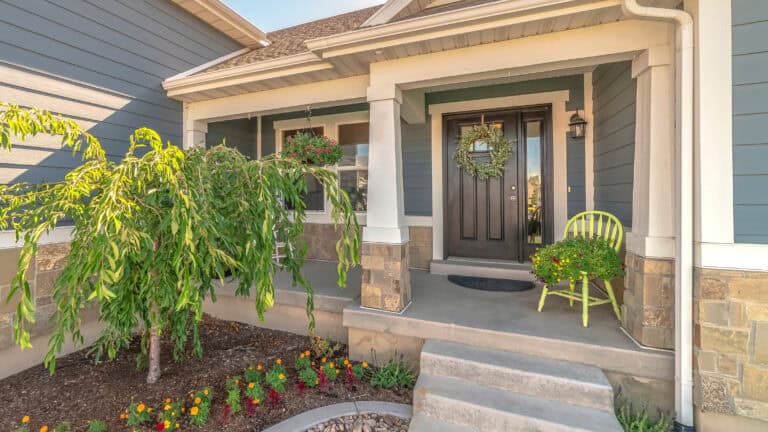
Craftsman is one of the most misused terms in residential design. Walk through any home improvement store and you’ll find “craftsman-style” hardware that has nothing to do with the architectural movement. Here’s what the style actually means — and how to recognize it in a floor plan.
The Six Defining Markers
A plan reads as Craftsman when it has most or all of these:
- Exposed exposed rafter tails. The ends of the roof rafters are visible under the eaves rather than hidden behind a fascia board. This is a structural detail made architectural.
- tapered columns. Porch columns are wider at the base than at the capital — often sitting on a stone or brick pier base. The taper is gradual and substantial, not a slight trim detail.
- Deep covered porch at the front entry. The covered porch is a primary architectural element, typically spanning the full width of the front façade, with the entry centered behind it.
- Low-to-moderate pitched roof. Craftsman rooflines run typically 4:12 to 6:12 pitch — lower than Victorian or cottage styles, which creates the distinctive broad, sheltering appearance.
- Wide overhangs. The roof extends well beyond the exterior walls — often 18 to 24 inches — providing both the shadow lines that define the style and weather protection for walls and windows.
- Natural materials palette. Wood, stone, and brick — not vinyl siding, not stucco, not smooth fiber cement. Craftsman character depends on material warmth.
What Gets Called Craftsman That Isn’t
Plans with simple window trim and a covered porch get called craftsman constantly. The actual test is whether the structural and proportional logic of the style is present. A plan with thin aluminum fascia, no exposed rafter tails, hollow porch columns, and aluminum windows isn’t craftsman. It’s a contemporary house with craftsman-adjacent trim. The full craftsman vocabulary, done right, creates a house that reads as authentic and ages well. The shortcut version looks like a trend decision that’ll date in 10 years.
How Craftsman Differs From Bungalow
Every bungalow is a craftsman-influenced design, but not every craftsman plan is a bungalow. Bungalow specifically refers to a small, one-and-a-half story house with a broad front porch and low roofline — a specific building type. Craftsman is the broader stylistic tradition that informed bungalows but also influenced two-story houses, foursquares, and larger designs.
When a plan is marketed as “craftsman bungalow,” that means a small craftsman-style house (typically 800 to 1,600 square feet) in the one-story-plus-loft or one-and-a-half-story form. Browse craftsman house plans for the full range.
Reading a Craftsman Floor Plan
The interior logic of a craftsman plan tends to match the exterior vocabulary: built-in shelving and cabinetry (often around the fireplace), window seats, and functional detail rather than decorative formality. A plan that has craftsman exterior markers but a generic open-concept interior with no built-ins may be a hybrid — not inauthentic, but worth evaluating on its own terms.
Can a craftsman plan be two stories?
Yes. The craftsman style was applied to all scales in the early 20th century. The key markers — exposed rafter tails, tapered columns, deep porch, wide overhangs — apply equally to two-story plans. The craftsman bungalow is the most famous small version, but two-story craftsman plans are legitimate and common.
What’s the difference between craftsman and arts-and-crafts style?
Arts and Crafts is the broader design movement that valued handcraft and natural materials over industrial production. Craftsman is the American residential architecture expression of that movement. They’re related terms, with craftsman being more specifically architectural and arts-and-crafts more broadly applied to furniture, textiles, and decorative arts.
Do craftsman plans work on sloped lots?
Yes. The wide overhangs and deep porches that define craftsman design actually suit sloped lots because the broad sheltering roof reads well from below. Many craftsman plans handle grade changes with a walkout lower level or stepped foundation that fits the horizontal emphasis of the style.
Related Reading
Looking for the plan that fits your land?
Browse the full catalog or call Max Sr. directly. We've been doing this since 1990 — usually it's a 10-minute conversation.