


Guide May 6, 2026
Modern vs. Traditional Farmhouse — What Actually Reads as Farmhouse
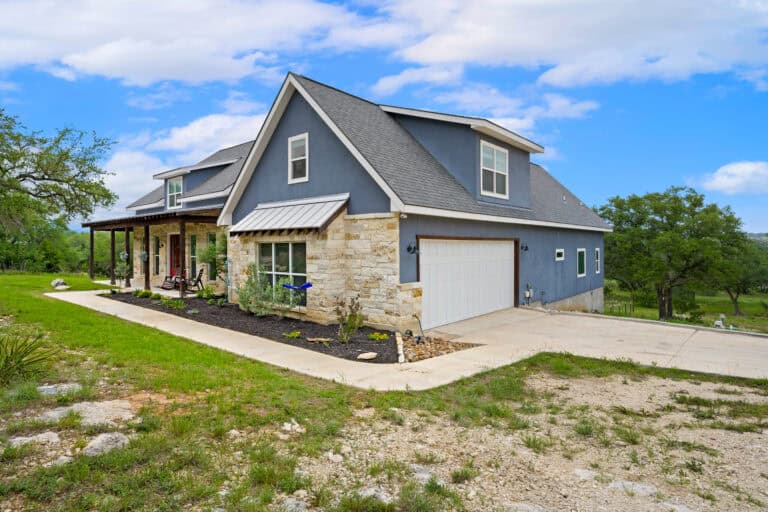
“Farmhouse” is doing a lot of work in current plan marketing. Some of what gets that label is genuinely in the farmhouse tradition. Some is a black-window-and-shiplap trend that’ll date badly. Here’s how to tell them apart.
What the Traditional Farmhouse Actually Looked Like
The American farmhouse grew out of practical constraints. Farmers built what they could with local materials and local labor, and added onto what existed when they needed more room. The result: simple gabled rooflines, wide covered porches on the south and west sides, board-and-batten or clapboard siding, and a floor plan organized around work flow rather than showmanship. White or muted earth tones. Minimal but present trim. A porch deep enough to sit on through a Southern storm. Usually a mudroom or back entry for field access.
What Happened With Modern Farmhouse
Modern farmhouse emerged from the interior design world more than architecture. Key markers: white board-and-batten or shiplap siding, black-framed windows, metal roof in standing seam, open great room with farmhouse sink, minimal exterior trim. Structurally, these plans look more like contemporary homes than traditional farmhouses — larger windows, asymmetric facades, and in many cases no real porch at all.
There’s nothing wrong with modern farmhouse as a style. But it’s worth being honest: what drives the look is current market preference, not vernacular logic. Some of these houses will feel dated in 15 years in ways that true farmhouse vernacular doesn’t.
Shared DNA
Both versions share: simple massing without Victorian or Craftsman complexity; preference for metal roofing; connection between inside and outside via porch or covered area; and an unpretentious material palette. The difference is mostly in trim level and window proportion. Traditional farmhouses have more trim and smaller vertical windows. Modern farmhouses have minimal trim and large-pane horizontal or square windows.
How to Pick
- Site character. Traditional farmhouse reads well on open land, mature trees, a gently sloped rural lot. Modern farmhouse works on a more exposed lot or semi-rural subdivision where context is mixed.
- Longevity preference. Traditional farmhouse vernacular has proven out over 150 years. If you’re building to last and resell in 20 years, the traditional version carries lower style risk.
- Interior preference. Modern farmhouse interiors (open, large windows, less compartmentalization) tend to pair with modern farmhouse exteriors. Traditional exteriors often carry more room definition inside.
Browse farmhouse house plans to compare both types side by side.
Can you mix modern farmhouse exterior with a traditional floor plan?
Yes, and it often works well. Exterior style and interior plan logic are more independent than they appear in photos. You can have a modern-farmhouse exterior with a plan that compartmentalizes more than the typical great-room layout. Specify what you want explicitly.
What’s the difference between modern farmhouse and contemporary?
Modern farmhouse keeps material warmth — wood tones, painted board-and-batten, natural textures. Contemporary design pushes toward industrial materials, concrete, and a cooler palette. Both use large windows and open plans, but farmhouse retains rural character while contemporary reads as urban or resort.
Will modern farmhouse designs look dated in 10 years?
Some will. The versions that lean heavily on trend-specific details (all black windows, open shiplap interior) are more at risk. The versions that prioritize underlying farmhouse logic — porch, simple massing, natural materials — will hold up better because those characteristics aren’t trend-driven.
Related Reading
Looking for the plan that fits your land?
Browse the full catalog or call Max Sr. directly. We've been doing this since 1990 — usually it's a 10-minute conversation.