


Guide May 6, 2026
How Deep a Wraparound Porch Really Needs to Be
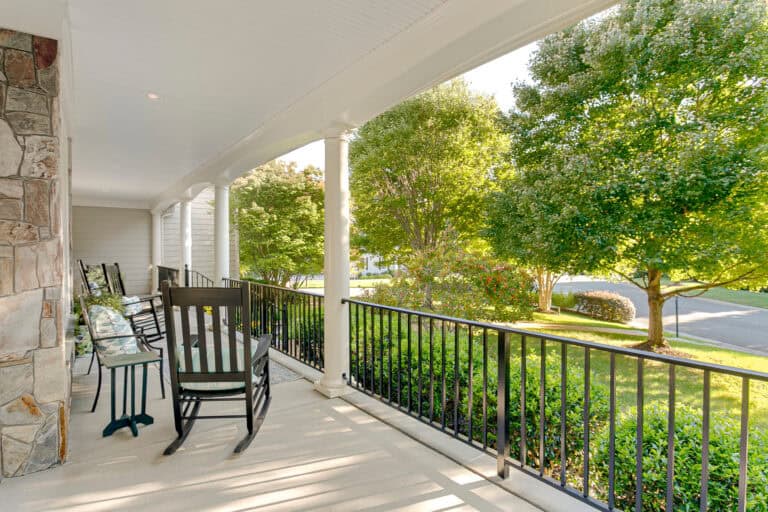
Wraparound porch depth is one of those specs that sounds obvious until you get the permit drawings back and realize “wraparound porch” was interpreted as a four-foot deck with a roof over it. Four feet isn’t a porch. It’s a ledge.
The Minimum That Actually Works
Eight feet is the practical floor. Below eight feet, you can’t fit a standard rocking chair turned sideways without blocking foot traffic. A table and chairs become impossible. Weather protection drops off quickly — a narrow roof overhang doesn’t keep rain off a chair positioned against the house wall. Eight feet works for occasional sitting but not outdoor living.
The Sweet Spot
Ten to twelve feet is where a porch becomes a room. At ten feet, you can set a dining table against the outer wall and still have four feet of clearance to walk the perimeter. At twelve feet, you can create a sitting area and a dining area on a long porch without crowding either. Twelve feet also improves weather performance significantly — the roof overhang extends further from the wall, providing better protection during driving rain. On Southern lake or mountain lots where storms can come from any angle, that extra depth matters.
Corner Columns and Structural Logic
A wraparound porch requires column placement at corners and at regular intervals. At eight feet, corner columns are often 8×8 posts at 10-12 foot intervals — serviceable but not particularly graceful. At ten to twelve feet, the spans allow for larger column spacing and more substantial posts, which read better architecturally.
The other structural consideration: the porch roofline transition at the corners. A good plan handles this with a continuous pitched roof rather than a cheap shed-roof connection. That transition detail is what separates a farmhouse that reads as one unified form from one that looks like a porch bolted on after the fact.
Width vs. Depth
Don’t confuse porch width (how long it runs along the house face) with depth (how far it extends from the wall). A 60-foot wide porch at 6 feet deep is worse than a 40-foot wide porch at 10 feet deep. Width gives you frontage; depth gives you usability. On a wraparound, keep the depth consistent around all sides. If budget forces a trade-off, reduce the return length rather than reducing depth.
Cost Reality
The cost difference between an 8-foot and 10-foot porch depth isn’t trivial, but it’s less than most people expect. On a 40-foot front porch, that’s 80 square feet of additional covered area. Compare that to the total project cost, and the math almost always favors the deeper porch. The version that isn’t worth it: spending on a wraparound that goes below 8 feet to save cost. Build fewer linear feet at proper depth rather than more at inadequate depth.
How deep should a screened porch sizing be?
Minimum 10 feet, ideally 12 to 14. A screened porch becomes a real outdoor room — furniture scale increases because you’re protecting it from weather and insects. The screen panels also look better when structural bays are wider, which comes from deeper post spacing.
Can a porch be too deep?
Past 14 feet, you lose the sunlight penetration that warms the porch in cooler months and creates the indoor-outdoor threshold character. Very deep porches (16+ feet) start to feel like enclosed rooms. For most farmhouse plans, 10 to 12 feet is the right range.
What’s the minimum ceiling height on a covered porch?
Nine feet is the minimum for a covered porch to feel proportionate. Eight feet reads low and compressed on an outdoor structure. If the porch connects to a first-floor entry at 9 or 10 feet, match the exterior ceiling height — the transition reads better and protects fenestration above the exterior doors.
Related Reading
Looking for the plan that fits your land?
Browse the full catalog or call Max Sr. directly. We've been doing this since 1990 — usually it's a 10-minute conversation.