
In this article
5 Best Small Cabin Plans Under 1,500 Sq Ft
If you’ve been searching for small cabin plans under 1500 sq ft, you’re not alone – and you’re not crazy for thinking smaller. Over the past few years, I’ve watched more and more families come to us looking for homes that make sense: efficient layouts, real outdoor living space, and construction budgets that don’t spiral out of control. These aren’t tiny homes or glorified sheds. They’re well-designed cabins that live bigger than their square footage suggests.
I’ve designed dozens of cabin and cottage plans over the years, and I keep coming back to a handful that just work. The kind of plans where every square foot earns its keep and nothing feels like filler. Here are my five favorites – each one under 1,500 square feet, each one solving a slightly different problem.
What Makes a Great Small Cabin Plan?
Before I get into the picks, let me tell you what I look for when I’m designing a cabin in this size range. It’s not about cramming rooms into a tight footprint. It’s about being intentional with every decision.
- Efficient layout – Minimal hallway space. Rooms that flow into each other without wasting square footage on circulation.
- Outdoor living – Porches, decks, and screened areas that extend your living space without adding to your heated square footage.
- Smart storage – Built-ins, pantries, and closet placement that keep a small home from feeling cluttered.
- Vaulted ceilings and open plans – Nothing makes a cabin feel bigger than vertical space and sightlines that carry across the main living area.
- Loft potential – Bonus space above the main floor for a home office, reading nook, or extra sleeping area.
Every plan on this list checks most – if not all – of those boxes. Let’s get into it.
1. Blowing Rock Cottage
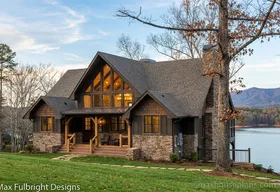
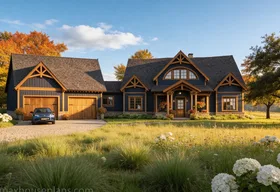
The Blowing Rock Cottage is a 3-bedroom, 2-bath mountain cabin that’s become one of our most popular small plans – and for good reason. This is the plan I point people to when they say, “I want a small cabin that doesn’t feel small.”
The open living area is the heart of this design. The great room, kitchen, and dining space all share one vaulted volume, which gives you that lodge-like feel without the lodge-sized price tag. The master suite is tucked to one side for privacy, while two secondary bedrooms sit on the opposite end. It’s a simple, clean separation that works whether you’re building a full-time home or a mountain getaway.
The rustic exterior – stone, board-and-batten, and a standing-seam metal roof – fits right into the North Carolina mountains where I designed it. But it’d look just as good in the Ozarks, the Smokies, or anywhere you want that mountain cabin character.
Best for: Families or retirees who want a mountain retreat with a wide-open living area and no wasted space.
2. Waterview Cabin
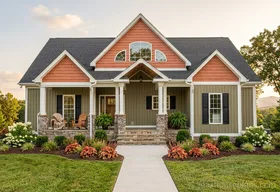
The Waterview Cabin is a 3-bedroom, 2.5-bath plan built to take advantage of a view – lake, river, valley, whatever you’ve got. This one’s all about orientation. The main living spaces and master bedroom face the view side, with a generous back porch that stretches across the full width of the house.
What I love about this plan is the way it balances openness with definition. The great room is open to the kitchen, but the kitchen has enough separation – a work island and pantry wall – that it doesn’t feel like you’re cooking in the living room. The half bath on the main level is a small detail that makes a big difference when you’re hosting.
Upstairs, two bedrooms share a full bath and a loft area that works as a flex space – home office, kids’ hangout, or extra sleeping when the house is full. The whole design has a lake cottage feel without being too casual. It’s polished enough for full-time living.
Best for: Lakefront or view lots where you want the house oriented toward the scenery with a strong indoor-outdoor connection.
3. Mossy Creek Cabin
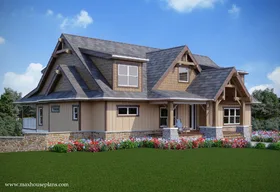
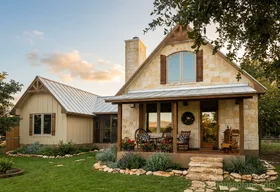
The Mossy Creek Cabin is where rustic meets craftsman, and it’s one of the most detailed small plans in our collection. At 3 bedrooms and 2.5 baths, it packs a surprising amount of function into a compact footprint.
This plan was designed for people who want character – timber accents, exposed rafters, natural materials – but also want a floor plan that makes everyday life easy. The main level has the master suite, an open kitchen-living area, and a covered porch that practically doubles your entertaining space in warm weather. The two upstairs bedrooms each have good closet space and share a bath with a bit more room than you’d expect.
I think of the Mossy Creek as the “builder’s choice” in this group. It’s the kind of plan that a contractor looks at and says, “That’s going to be a beautiful home.” The proportions are right. The details are intentional. Nothing about it feels like a compromise.
Best for: Buyers who want craftsman character and rustic details in a small cabin plan under 1500 sq ft that doesn’t cut corners on design.
4. The Runaway
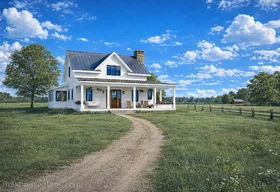
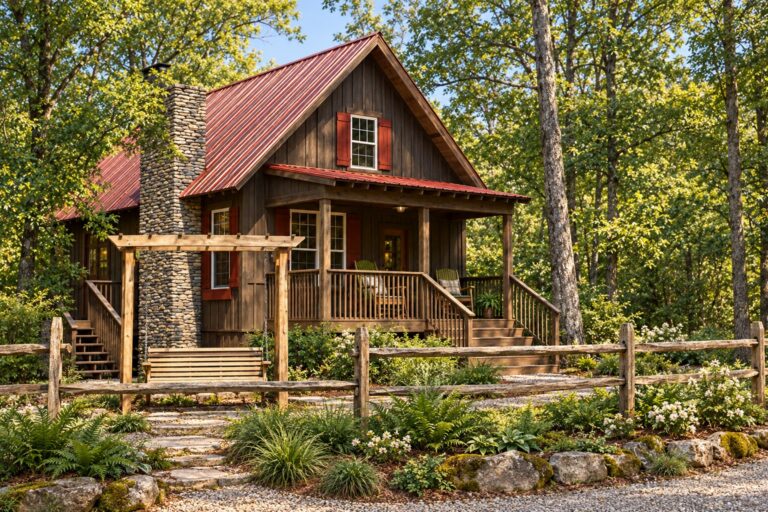
The Runaway – yes, the name is intentional. This is your escape plan. A 3-bedroom, 2.5-bath lake cottage designed for the family that wants to slow down on weekends and maybe, one day, never leave.
The layout is straightforward and smart. The main living area opens to a screened porch – which, if you’ve ever spent a summer evening on a lake, you know is the most important room in the house. The kitchen is efficient without being cramped, with enough counter space to actually cook a real meal for a group. The master is on the main floor with a walk-in closet and a bathroom that feels generous for a home this size.
Upstairs, two bedrooms and a shared bath give guests or kids their own space. There’s also a small loft area that’s perfect for a reading nook or a place to set up a laptop when you can’t fully disconnect from work.
The exterior has that classic lake cottage charm – a steep roofline, board-and-batten siding, and a deep front porch that says, “Pull up a chair and stay awhile.”
Best for: Lake property owners who want a turnkey cottage that works for weekends now and full-time retirement later.
5. Acadia Mountain Cottage
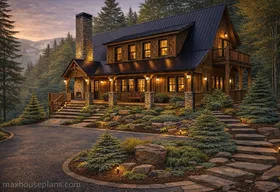
The Acadia Mountain Cottage rounds out the list with a 3-bedroom, 2-bath plan that leans into mountain craftsman style. If the Blowing Rock Cottage is the open, airy option, the Acadia is its cozier cousin – a little more defined in its spaces, a little more traditional in its feel.
The great room still has vaulted ceilings and an open connection to the kitchen, but there’s a dining area that feels like its own space rather than just an extension of the living room. That’s a design choice some families really appreciate – especially if you like to set a table for dinner instead of eating at the island.
The master suite is well-sized with a walk-in closet and a bath that includes a separate tub and shower. Two secondary bedrooms share the second bath. Outside, the porch wraps enough to give you options – morning coffee on one side, evening sunsets on the other.
The Acadia is a strong choice for anyone who wants the mountain cabin aesthetic with a floor plan that feels a bit more structured and traditional. It’s small cabin living with full-size comfort.
Best for: Families who prefer defined spaces over fully open layouts and want craftsman style in a compact mountain plan.
Tips for Building Small Without Feeling Cramped
Designing small cabin plans under 1500 sq ft has taught me a few things about making compact homes feel spacious. Here’s what works:
- Vault the main living space. A cathedral or vaulted ceiling in the great room changes everything. Even if the footprint is modest, vertical space tricks your eye into thinking the room is bigger than it is.
- Open the kitchen to the living area. Walls between the kitchen and great room are the fastest way to make a small home feel like a small home. Take them out.
- Invest in porches. A covered porch is the cheapest square footage you’ll ever build. It extends your living space three seasons a year (four in the South) without adding to your heating bill.
- Minimize hallways. Every square foot of hallway is a square foot you can’t use for anything else. The best small plans move you from room to room without long corridors.
- Use natural light. Big windows, transoms, and glass doors make rooms feel open and connected to the outdoors. Don’t skimp here – it’s the difference between cozy and claustrophobic.
Why Small Cabin Plans Are Having a Moment
I’ve been designing homes for a long time, and the shift toward smaller, smarter plans is real. Construction costs keep climbing. Material prices are unpredictable. And a lot of buyers – especially people building second homes or planning for retirement – are realizing they don’t need 3,000 square feet to live well.
A well-designed cabin under 1,500 square feet costs less to build, less to heat and cool, less to maintain, and less to furnish. You spend your weekends on the porch instead of cleaning rooms you never use. That’s not downsizing. That’s right-sizing.
Every plan on this list was designed with that philosophy. No filler rooms. No wasted space. Just good design that works for real life.
Frequently Asked Questions
How much does it cost to build a small cabin under 1,500 sq ft?
Building costs vary widely by region, but as a general range, you can expect to spend between $150 and $300 per square foot for a quality-built cabin. That puts a 1,200 to 1,500 sq ft cabin somewhere between $180,000 and $450,000 depending on your location, finishes, and site conditions. The advantage of building small is that you can invest more per square foot in quality materials without blowing your total budget.
Can small cabin plans be modified to add a basement or garage?
Absolutely. Most of the plans on this list can be adapted for a basement foundation, which is especially common on sloped mountain or lake lots. A basement can add significant storage, mechanical space, or even a finished bonus room. Garage additions – whether attached or detached – are also common modifications. We handle plan modifications regularly, so if you see a design you love but need a tweak, just reach out.
Are these cabin plans suitable for full-time living?
Yes – every plan on this list is designed to work as a full-time residence, not just a weekend getaway. They include full kitchens, proper master suites, adequate closet and storage space, and mechanical rooms for HVAC systems. Many of our clients build these as retirement homes or primary residences in mountain or lakefront communities.
What’s the difference between a cabin plan and a cottage plan?
Honestly, the line is blurry. In our collection, “cabin” tends to lean more rustic – think stone, timber, and metal roofing – while “cottage” is a bit softer with board-and-batten siding and lighter finishes. But functionally, they’re the same. Both are compact, efficient home designs built for comfort. Don’t get hung up on the label – focus on the floor plan and the style that fits your property.
Do small cabin plans work on sloped lots?
Many of them are specifically designed for it. Mountain and lake lots are rarely flat, so plans like the Blowing Rock Cottage and Acadia Mountain Cottage are built with sloped sites in mind. A walkout basement on a sloped lot is one of the best ways to add square footage and functionality without increasing your home’s visible footprint. If you have a challenging lot, let us know – we can recommend the right plan or modify one to fit your terrain.
Find Your Perfect Cabin Plan
These five plans represent some of the best small cabin designs we offer, but they’re just the starting point. If you’re looking for something with a different bedroom count, a specific style, or a unique lot situation, we’ve got a full collection waiting for you.
Browse all of our house plans here and find the one that fits your land, your budget, and the way you actually want to live.