

In this article
The dogtrot is one of the most sensible residential designs ever developed in North America — and one of the least understood. It’s not just a floor plan configuration. It’s a specific building logic that responds to climate, land, and the way people actually live in hot weather.
The Original Design
The traditional dogtrot consists of two separate one-room cabins — typically one for sleeping and one for cooking and eating — connected by a single roofline over an open open vs. enclosed breezeways. The breezeway runs through the house from front to back, open on both ends. Dogs could trot through it freely, which gave the form its name — though the humans used it just as readily.
In the rural South, where dogtrot houses originated in the late 18th and early 19th centuries, this configuration solved several real problems simultaneously: the open breezeway channeled prevailing breezes through the hot core of the house; the separation of the cooking cabin reduced fire risk and kept cooking heat away from sleeping areas; and the covered outdoor space created a usable room in every season without conditioning.
Why the Form Still Works
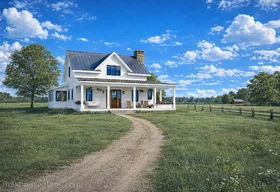
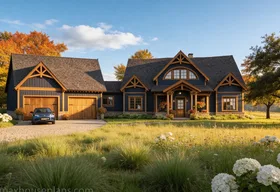
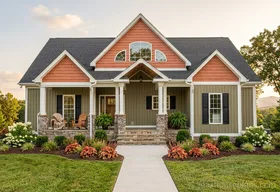
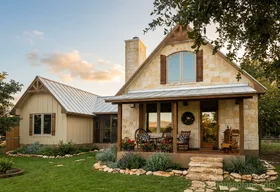
The problems the dogtrot solved haven’t gone away. In Southern climates especially, the logic of the open breezeway as passive cooling and the covered outdoor room as primary living space is as relevant today as it was before air conditioning. Modern dogtrot plans adapt the form for contemporary living: the two “cabins” become bedroom wing and living/kitchen wing, the breezeway becomes a covered outdoor room rather than a working passage, and the open-on-both-ends configuration is preserved or adapted with screens. Browse dogtrot house plans for current examples.
The Breezeway as Outdoor Room
The best modern dogtrot designs treat the breezeway as a primary outdoor living room, not a through-passage. Oriented toward the prevailing breeze, covered against rain, and screened against insects, it becomes the place the family actually spends time in mild weather — eating, working, cooling off. This is different from a porch. A porch is attached to one face of the house. A dogtrot breezeway is sheltered on both sides by the house itself, which creates a more protected microclimate and stronger sense of enclosure without being conditioned space. It’s one of the most cost-effective “rooms” in residential design — zero HVAC cost, maximum livability in the right climate.
Where Dogtrot Plans Work Best
Hot, humid climates: the Southeast, Gulf Coast, and parts of the mid-Atlantic. The breezeway becomes less useful in climates where heat isn’t the dominant challenge — in cold climates, the open breezeway is essentially dead space for 5 months of the year. Orientation matters: a dogtrot should align the breezeway with the prevailing summer breeze — typically from the south or southwest in the Southeast. A dogtrot oriented perpendicular to the prevailing wind doesn’t ventilate as well, though it still provides covered outdoor space.
Is a dogtrot the same as a breezeway house?
Close but not identical. A breezeway house often refers to any house with a covered connection between the main house and a detached garage — a common 1950s–60s suburban configuration. A dogtrot specifically refers to two habitable wings connected under a single roof with an open passage between them. The dogtrot breezeway is more architecturally integrated than a simple breezeway connector.
Can a dogtrot be air conditioned?
The main wings, yes. The breezeway, generally no — it’s designed to be open or screened. You can enclose a breezeway to create conditioned space, but that defeats the design logic and turns it into a generic hallway. The architectural solution, if you need year-round connection, is to make the breezeway a screened room that can be opened in mild weather and closed during temperature extremes.
What’s the minimum size for a functional dogtrot breezeway?
Twelve feet is the practical minimum width for a dogtrot breezeway to function as an outdoor room. Below that, it reads as a passage rather than a space. Many traditional dogtrot breezeways were 16 to 20 feet wide — enough for a table and chairs on one side and a sitting area on the other.