
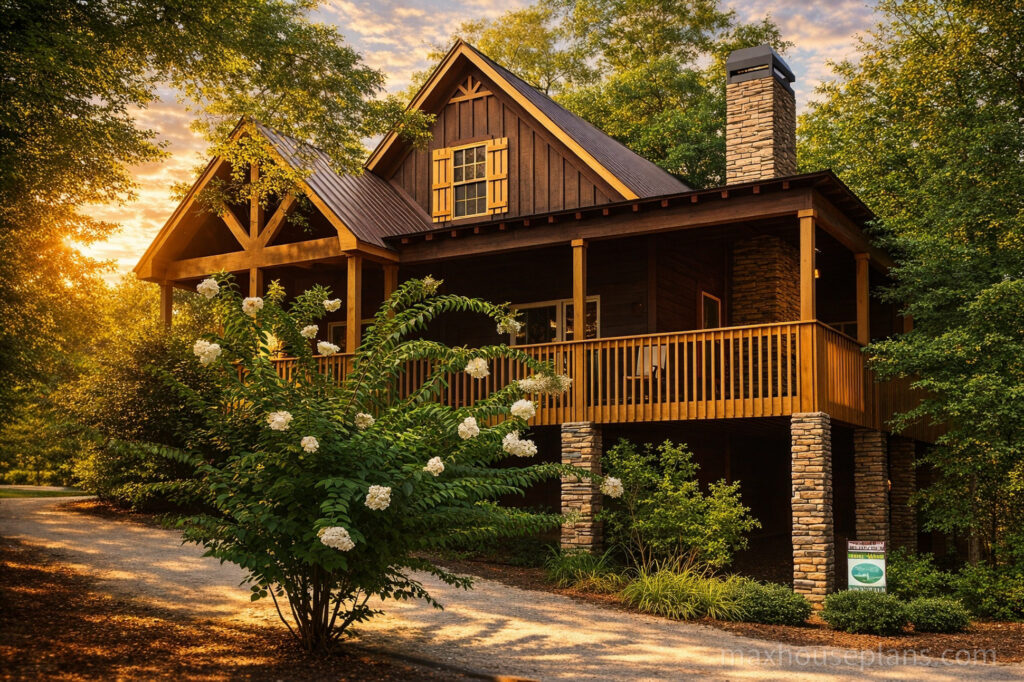
Little River Cabin
I designed the Little River Cabin as a 2 to 3-bedroom, 2.5-bath small cabin that gives you 1,187 square feet across two stories in a package just 34 feet wide. With a wraparound porch, a screened porch, and…
Cabin Collection · With Porch
Cabin plans where the porch is part of the daily layout: entry, shade, sitting, outdoor dining, lake gear, mountain air, and a better connection to the land.
I designed the Little River Cabin as a 2 to 3-bedroom, 2.5-bath small cabin that gives you 1,187 square feet across two stories in a package just 34 feet wide. With a wraparound porch, a screened porch, and…
These picks favor usable porch depth, cabin character, and layouts that connect outdoor space to the rooms people use every day.
Mountain, Rustic, Cabin · 3-Story
Mountain, Rustic, Cabin · 2-Story
Mountain, Rustic, Cabin · 3-Story
Porch cost comes from roof, structure, decking, rail, ceiling, and screening, but it can make a compact cabin live much larger.
A cabin porch is not a porch — it is the second room. Eight feet deep is the floor, twelve feet is honest, the ceiling is tongue-and-groove cedar, and the floor is whatever survives boots and rain. Skip any of those and the cabin loses half of what makes it a cabin.Max Fulbright Sr. Lead Designer + Builder · 35 Years
Numbers reflect 2026 national averages for a covered porch package on a cabin build. Cedar columns, tongue-and-groove ceilings, and screened sections move the top of each line up.
A cabin porch should be planned as a room, not trim.
View, woods, water, or shade should decide porch placement.
Furniture and traffic need real depth.
Kitchen, dining, or great room access makes the porch easy to use.
Screening can turn a porch into the best room on buggy nights.
Some sites need covered entry plus open deck instead of one big covered porch.
The right cabin modifier depends on lot shape, sleeping needs, and how much outdoor living should carry the design.
Best when the footprint needs to stay efficient but the porch, storage, and main room still matter.
Adds sleeping or flex space without widening the foundation, as long as stairs and headroom work.
Best when the cabin should live outside as much as inside: woods, lake edges, mountain air, and long evenings.
Pairs cabin character with roof forms, porches, and foundations that belong on rugged or wooded land.
Uses a sloped lot for guest space, gear storage, views, or a second outdoor connection.
The porch should match climate, view, and the way the cabin will actually be used.
Cabins depend heavily on grade, driveway approach, view direction, trees, and where outdoor living should happen.
Simple roof forms usually feel more cabin-like and are easier to build than decorative complexity.
Gear, linens, pantry goods, and seasonal equipment need a real place to land.
A cabin porch should be deep enough to sit, not just wide enough to photograph.
A weekend cabin, rental cabin, and forever cabin do not need the same materials or mechanical plan.
Eight feet is the practical target for sitting. Six feet can work for entry, but it rarely feels like an outdoor room.
Face the porch toward the thing you came for: view, woods, water, shade, or privacy. Curb appeal matters less than daily use on many cabin sites.
Often yes in buggy or humid climates. Screening one good porch zone can be better than making every porch expensive.
For retreat use, yes. A good porch can carry sitting, dining, and overflow without adding fully conditioned area.
Not sure which plan fits your lot