
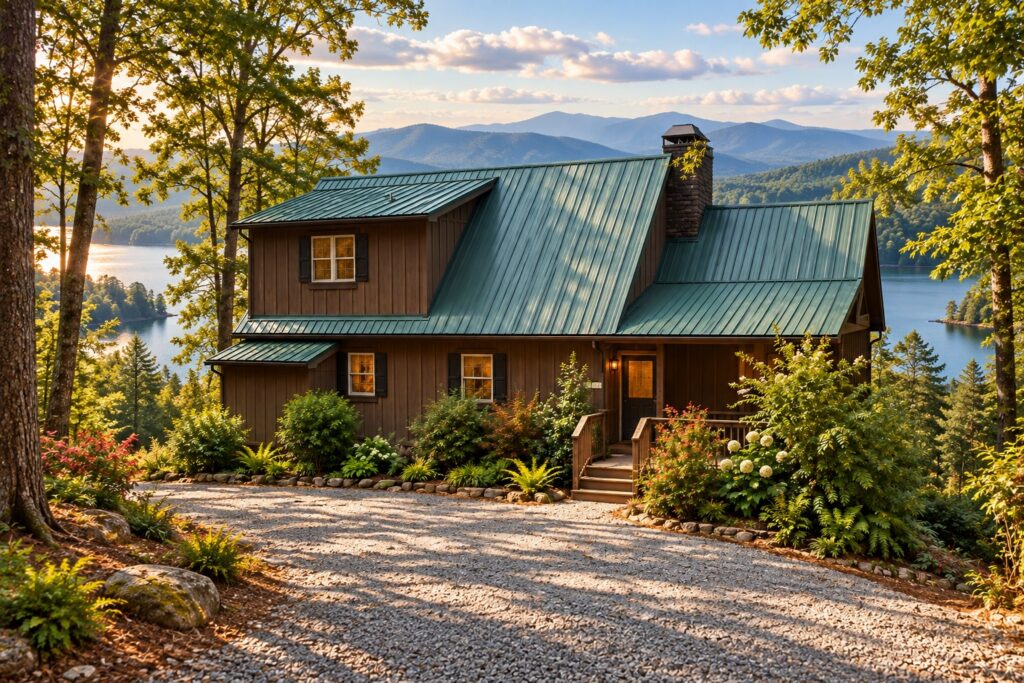
Mountain Moss Cabin
The Mountain Moss Cabin is a 4-bedroom, 3.5-bath cabin that squeezes 1,254 square feet of living into three stories on a footprint built for small, sloping, and narrow lots. I designed this plan for the buyer who wants…
Cabin Collection · Mountain Plans
Cabin plans for mountain and wooded sites: strong rooflines, porch living, view-facing rooms, slope-aware foundations, and enough ruggedness to feel at home on the land.
The Mountain Moss Cabin is a 4-bedroom, 3.5-bath cabin that squeezes 1,254 square feet of living into three stories on a footprint built for small, sloping, and narrow lots. I designed this plan for the buyer who wants…
These picks favor cabin scale, mountain setting, porch or deck potential, view-facing living, and foundations that can work with real grade.
A-Frame, Cabin, Mountain · 3-Story
Mountain, Rustic, Cabin · 2-Story
Mountain, Rustic, Cabin · 3-Story
Mountain sites can make foundation, driveway, utilities, and deck structure more important than the plan size alone.
A mountain cabin should be drawn for the slope first and the silhouette second. The walkout level is the cheapest square footage you will ever build, the porch is the room you actually live in, and the roof has to shed snow without complaint. Get those three right and the rest is finishes.Max Fulbright Sr. Lead Designer + Builder · 35 Years
Numbers reflect 2026 national averages for a mountain cabin with mid-range finishes and a moderate sloped lot with walkout. Steeper grades, rock excavation, and premium glass packages move the top of each line up.
Mountain cabin choices should start with grade, view, and access.
Main living should face the reason you bought the lot.
Slope decides whether crawlspace, walkout, or drive-under makes sense.
Access affects garage, entry, excavation, and daily comfort.
Porch, deck, or screened space should handle sun, rain, and wind.
If the lot is flat or water-focused, another collection may match better.
The right cabin modifier depends on lot shape, sleeping needs, and how much outdoor living should carry the design.
Best when the footprint needs to stay efficient but the porch, storage, and main room still matter.
Adds sleeping or flex space without widening the foundation, as long as stairs and headroom work.
Best when the cabin should live outside as much as inside: woods, lake edges, mountain air, and long evenings.
Pairs cabin character with roof forms, porches, and foundations that belong on rugged or wooded land.
Uses a sloped lot for guest space, gear storage, views, or a second outdoor connection.
Mountain plans should be chosen around the land, not forced onto it.
Cabins depend heavily on grade, driveway approach, view direction, trees, and where outdoor living should happen.
Simple roof forms usually feel more cabin-like and are easier to build than decorative complexity.
Gear, linens, pantry goods, and seasonal equipment need a real place to land.
A cabin porch should be deep enough to sit, not just wide enough to photograph.
A weekend cabin, rental cabin, and forever cabin do not need the same materials or mechanical plan.
Site fit. Roof, foundation, windows, porch placement, driveway approach, and view orientation all need to work with grade and weather.
No, but walkouts are common on downhill sites. Some mountain cabins work better with crawlspace, pier, or drive-under solutions.
Usually yes. Put the rooms you use most toward the best light and view before spending on decorative exterior features.
Driveway, excavation, foundation, retaining, decks, long utility runs, and large windows can all outrun simple square-foot math.
Not sure which plan fits your lot